18-12-2016
Beta cryptoxanthin, an excellent source of vitamin A for the body


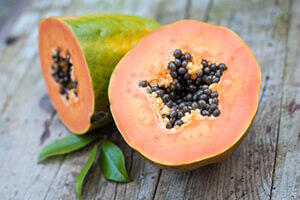 Beta-cryptoxanthin, or cryptoxanthin as it is also known, is a natural pigment found mainly in fruit and vegetables including mandarins, oranges and papaya. Long-unrecognised, beta-cryptoxanthin has recently been arousing interest among the global scientific community. It has a similar structure to that of beta-carotene, another natural pigment more widely-known as a compound in carrots. Extensively-documented in the scientific literature, beta-carotene is also known for its antioxidant properties and its role as a vitamin A precursor. Its effect is all the more powerful because so many of the body’s functions involve vitamin A. The similarity of beta-cryptoxanthin to beta-carotene is therefore now the subject of extensive study, offering as it does, significant preventive and therapeutic potential.
Il Beta-cryptoxanthin, a powerful carotenoid
In addition to having a similar chemical structure, beta-cryptoxanthin and beta-carotene are part of the same family of molecules. Naturally present in many plants, they are known for their role in photosynthesis and for giving plants their colour. Indeed, these natural pigments are responsible for the red, orange, yellow and green colours of many fruits and vegetables, as well as certain plants and algae. As a result, carotenoids are a regular part of our diet – indeed, there are more than fifty of them in the human diet. The body benefits considerably from absorbing carotenoids as they confer a number of protective effects. However, not all carotenoids are equal in terms of properties, bioavailability or efficacy. In fact, there are two major groups of carotenoids – the carotenes, which include beta-carotene, and the xanthophylls, which include beta-cryptoxanthin. Among these sub-groups, beta-cryptoxanthin constitutes a powerful carotenoid which undoubtedly makes a significant contribution to healthy body function.Strong antioxidant potency
Carotenoids are recognised for their antioxidant properties which are responsible for the preventive and therapeutic benefits of beta-carotene and beta-cryptoxanthin. With this antioxidant potency, they are powerful protectors against oxidative stress and free radical damage. This protective effect is all the more valuable given that oxidative stress is involved in the onset of a number of diseases and in the process of cellular ageing.A vitamin A precursor
Apart from their antioxidant function, around 10% of carotenoids, including beta-carotene and beta-cryptoxanthin, are also precursors of vitamin A, or provitamins A. Beta-cryptoxanthin’s provitamin A role has been confirmed by several studies, the results of which appeared in the Journal of the Science of Food and Agriculture in 2005 as well as in Nutrition Reviews in 20161,2. Scientists have thus demonstrated that beta-cryptoxanthin is converted in the body into retinol, one of three forms of vitamin A.A useful source of vitamin A
As a precursor, beta-cryptoxanthin constitutes an excellent source of vitamin A, a particularly beneficial property given that the vitamin plays a key role in healthy body function via a number of mechanisms of action 1,3. Vitamin A is primarily known for the essential role it plays in vision, in embryonic development, in regulating the body’s immune system, in cell growth and in the renewal of tissues such as the skin or the intestinal mucosa.Preventive and therapeutic benefits of beta-cryptoxanthin
1. Beta-cryptoxanthin’s therapeutic potential has made it the subject of numerous scientific studies. Its antioxidant potency means it can combat attacks, reducing damage to the body, while its conversion into retinol makes it key to maintaining vitamin A levels within the body. In addition to these roles, researchers have suggested that beta-cryptoxanthin may be involved in other mechanisms of action. It is believed, in particular, to offer potential in preventing certain degenerative diseases, osteoporosis, and some forms of cancer.2.Beta-cryptoxanthin’s role in bone homeostasis
For some years, a number of research teams have been investigating the role of beta-cryptoxanthin in bone homeostasis. This is the balance between the creation of new bone by specific cells called osteoblasts, and the resorption of old bone by cells called osteoclasts. This equilibrium can become disrupted with age and imbalances can lead to a decline in bone formation and an increase in bone resorption. In other words, disruption to bone homeostasis compromises bone health. This process is exacerbated in osteoporosis, a disease that results in changes to bone structure and loss of bone density. When bones become weaker, they are more vulnerable to fracture. Seeking to counter this age-related problem, a group of scientists examined the potential of beta-cryptoxanthin in bone health. Their findings, published in 2012 in the Journal of Biomedical Science, showed in vitro that beta-cryptoxanthin both stimulates the osteoblasts involved in bone formation, and inhibits the osteoclasts responsible for bone resorption4. Similar results were observed when beta-cryptoxanthin was administered to rats5,6. The researchers saw a reduction in bone loss and an inhibitory effect on osteoclasts. Beta-cryptoxanthin may therefore help preserve bone structure by combatting age-related changes. Their conclusions identify new perspectives for preventing osteoporosis.Beta-cryptoxanthin provides new hope in the prevention of certain cancers
Alongside these findings on bone health, other scientists are investigating beta-cryptoxanthin’s potential for preventing certain cancers. The results of recent studies published in Clinical Cancer Research and Food Chemistry, showed positive results for beta-cryptoxanthin in the treatment of cancer of the stomach and colon7,8. Researchers concluded that cryptoxanthin could reduce proliferation of cancer cells in human digestive system tissue. Other research published in Cancer Epidemiology, Biomarkers & Prevention identified a possible association with a decreased risk of lung cancer. Conducted in Singapore over five years, and involving more than 60,000 male and female subjects, the study showed that a diet rich in beta-cryptoxanthin may be associated with a significantly lower risk of developing lung cancer9. A similar conclusion was reached in a study published in the International Journal of Cancer10. Here, researchers described beta-cryptoxanthin’s mechanism of action and its effect against proliferation of lung cancer cells. These studies suggest that beta-cryptoxanthin may constitute a chemo-preventive agent against certain forms of cancer.Optimal intake of beta-cryptoxanthin
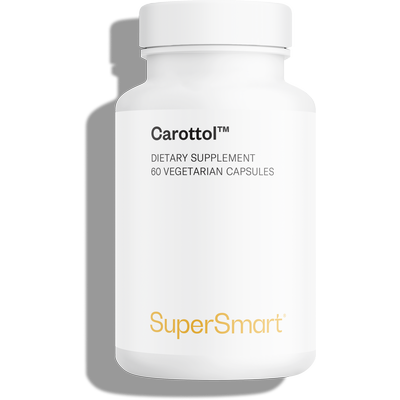
Though there remains much to learn about beta-cryptoxanthin, scientists are already crediting it with producing many effects in the body. There is thus every reason to believe it will not be long before it is as well-known as the very popular beta-carotene, which features in dietary supplements such as the product Carottol™ in the Supersmart catalogue. Beta-cryptoxanthin is similarly now available as a nutritional supplement, enabling consumers to benefit from its antioxidants properties, its role as a provitamin A and its effects in the body.
As with many carotenoids, beta-cryptoxanthin is found in numerous plants as well as in fruit and vegetables such as mandarins, oranges, red peppers, persimmon, pumpkin, papaya and apples. It is also present in other living organisms, particularly bovine blood serum, egg yolks and butter1,2.
Natural beta-cryptoxanthin extract in a dietary supplement
In order to capitalise on its effects, beta-cryptoxanthin has been extracted from a Japanese variety of mandarin for formulation into a dietary supplement. This satsuma mandarin, or Citrus unshiu, has been selected for its high beta-cryptoxanthin content 4 which enables the production of an optimal formulation.Though it has been studied for just a few years, beta-cryptoxanthin has already shown exceptional potential. It has many advantages in common with beta-carotene, the effects of which have been demonstrated innumerable times. It is thus considered a provitamin A with strong antioxidant power. As a result of these properties, beta-cryptoxanthin is arousing interest among the scientific community which attributes many effects in the body to this promising carotenoid. Now the subject of research across the globe, beta-cryptoxanthin offers new perspectives for the prevention and treatment of a number of diseases. .
Sources :
1. Burri BJ, « Beta-cryptoxanthin as a source of vitamin A », J Sci Food Agric, 2015 Jul, 95(9) : 1786-94.
2. Burri BJ, La Frano MR, Zhu C, « Absorption, metabolism, and functions of β-cryptoxanthin », Nutr Rev, 2016 Feb, 74(2) : 69-82.
3. Anses - Agence nationale de sécurité sanitaire de l’alimentation, de l’environnement et du travail, « Vitamine A & caroténoïdes provitaminiques », 14 avril 2016 : https://www.anses.fr/fr/content/vitamine-carot%C3%A9no%C3%AFdes-provitaminiques 4. Yamaguchi M, « Role of carotenoid β-cryptoxanthin in bone homeostasis », J Biomed Sci, 2012 Apr 2, 19 : 36.
5. Uchiyama S, Yamaguchi M, « Oral administration of beta-cryptoxanthin prevents bone loss in ovariectomized rats », Int J Mol Med, 2006 Jan, 17(1) : 15-20.
6. Uchiyama S, Yamaguchi M, « Inhibitory effect of beta-cryptoxanthin on osteoclast-like cell formation in mouse marrow cultures », Biochem Pharmacol, 2004 Apr 1, 67(7) : 1297-305.
7. San Millán C, Soldevilla B, Martín P, Gil-Calderón B, Compte M, Pérez-Sacristán B, Donoso E, Peña C, Romero J, Granado-Lorencio F, Bonilla F, Domínguez G, « β-Cryptoxanthin Synergistically Enhances the Antitumoral Activity of Oxaliplatin through ΔNP73 Negative Regulation in Colon Cancer », Clin Cancer Res, 2015 Oct 1, 21(19) : 4398-409.
8. Wu C, Han L, Riaz H, Wang S, Cai K, Yang L, « The chemopreventive effect of β-cryptoxanthin from mandarin on human stomach cells (BGC-823) », Food Chem, 2013 Feb 15, 136(3-4) : 1122-9.
9. Yuan JM, Stram DO, Arakawa K, Lee HP, Yu MC, « Dietary cryptoxanthin and reduced risk of lung cancer: the Singapore Chinese Health Study », Cancer Epidemiol Biomarkers Prev, 2003 Sep, 12(9) : 890-8.
10. Lian F, Hu KQ, Russell RM, Wang XD, « Beta-cryptoxanthin suppresses the growth of immortalized human bronchial epithelial cells and non-small-cell lung cancer cells and up-regulates retinoic acid receptor beta expression », Int J Cancer, 2006 Nov 1, 119(9) : 2084-9.
Order the nutrient mentioned in this article
Further reading
21-08-2019
The fight against ageing continues. Researchers working for a start-up biotech company have discovered the beneficial effects of urolithin A 1 , a substance produced...
Read more
20-02-2019
You’re interested enough in nutrition to know that antioxidants are essential for good health. You know, for example, that fruits and vegetables contain large amounts...
Read more
21-06-2017
Green tea has been a source of scientific interest for several years, largely because of its polyphenol content. Polyphenols are recognised as potent, natural antioxidants...
Read moreFollow us


© 1997-2026 Fondation pour le Libre Choix
All rights reserved
All rights reserved
Free
Thank you for visiting our site. Before you go
REGISTER WITHClub SuperSmart
And take advantage
of exclusive benefits:
of exclusive benefits:
- Free: our weekly science-based newsletter "Nutranews"
- Special offers for club members only